Someone asks, usually early in a study circle and usually a little nervously, whether the Wheel of the Year is ancient. There are two answers commonly given and both of them are wrong. The first is yes, this is the immemorial calendar of our ancestors, which is not true. The second is no, it was made up in the 1950s by a retired civil servant and a Druid, so it does not count, which is also not true and is somehow worse.
The accurate answer takes a paragraph or two more, and it leaves you with a calendar you can actually defend. Half the wheel is genuinely old and genuinely documented. Half of it was assembled within living memory. Several of the names you use are younger than the Beatles. None of this is a scandal, and knowing which is which is what allows you to keep the thing with a clear conscience.
The four that are old
The Gaelic year turned on four days, and they are not the solstices and equinoxes. They are the cross-quarters: Samhain at the start of November, Imbolc at the start of February, Bealtaine at the start of May, Lughnasadh at the start of August.
The clearest early witness is a passage in the Old Irish tale Tochmarc Emire, the wooing of Emer, in which the four festivals are named in order as the divisions of the year. That text takes us back well beyond the medieval manuscripts that preserve it. The festivals then turn up all over the early Irish literature as narrative furniture: things happen at Samhain, assemblies are held at Lughnasadh, the Otherworld is nearer at particular moments and everyone in the story knows it without being told.
What they meant is agricultural and social before it is mystical. Imbolc sits at the start of the lactation of the ewes, which is the first food after the hungry stretch, and it attaches itself to Brigid so early that the pre-Christian and Christian layers cannot be cleanly separated. Bealtaine is the movement of cattle to the summer grazing, with the fires and the driving of beasts between them for protection. Lughnasadh is the first of the harvest and, in Ireland, the great assembly, the óenach, with its games, its contracts and its temporary law. Samhain is the return of the herds, the slaughter, the end of the working year, and the point at which the boundary is reckoned to be thin.
In Scotland the same four survive into recorded folk practice as Là Fhèill Brìghde, Bealltainn, Lùnastal and Samhainn, and they sit alongside a parallel set of Scots legal term days, Candlemas, Whitsunday, Lammas and Martinmas, which are the same skeleton wearing a different coat. Rents were due, servants were hired, leases turned. A festival that is also a quarter day for paying your rent is a festival that people cannot forget.
The four that were added
The solstices and equinoxes are a different case, and the distinction is worth getting exactly right, because people muddle it in both directions.
Did the solstices matter to people in Britain and Ireland in deep prehistory? Beyond argument, yes. Newgrange is aligned so that the rising sun at midwinter runs a beam down the passage into the chamber. Maeshowe on Orkney does something comparable. Whoever built those structures was tracking the sun with precision and enormous investment. That is not in doubt and never has been.
What is missing is the middle. There is no continuous, named, documented Gaelic festival tradition at the solstices and equinoxes running from the Neolithic to the present, in the way there demonstrably is for the four cross-quarters. Midsummer fires are attested in Britain and across Europe, certainly, and midwinter has Christmas sitting on top of whatever was there before. But the neat eight-spoked wheel, alternating cross-quarter and solar, presented as a single inherited system, does not appear in the historical record. It appears in the twentieth century.
Specifically, it appears in the late 1950s, out of an exchange between Gerald Gardner, who was building modern Wicca, and Ross Nichols, who would go on to found the Order of Bards, Ovates and Druids in 1964. Between them they combined the four Gaelic fire festivals with the four solar stations to produce the eightfold year that is now everywhere. Robert Graves and The White Goddess, published in 1948, sits in the background of that decade doing a great deal of atmospheric work and a great deal of scholarly damage at the same time.
Some of the names are younger still. Ostara and Litha are lifted from Bede, who in the eighth century listed the Old English month names Eosturmonath and Litha in a book about calculating the date of Easter. Mabon is younger than that by twelve hundred years: the American writer Aidan Kelly applied the name, taken from a figure in the Mabinogi who has nothing to do with the autumn equinox, in the mid 1970s, because the equinoxes needed labels and nobody had supplied any.
Four of these festivals are older than the manuscripts that record them. One of them is younger than the moon landing. Both statements are true of the calendar you are keeping.
If something dropped in you at the word invented, hold on. I am not about to take the calendar away from you, and I am not being kind when I say that. I mean it structurally.
Every living tradition has a moment where somebody made something up on purpose, and the wheel is no worse for having its moment in living memory rather than in a manuscript. What it is, is younger. What it earns is another question entirely.
Illustrations
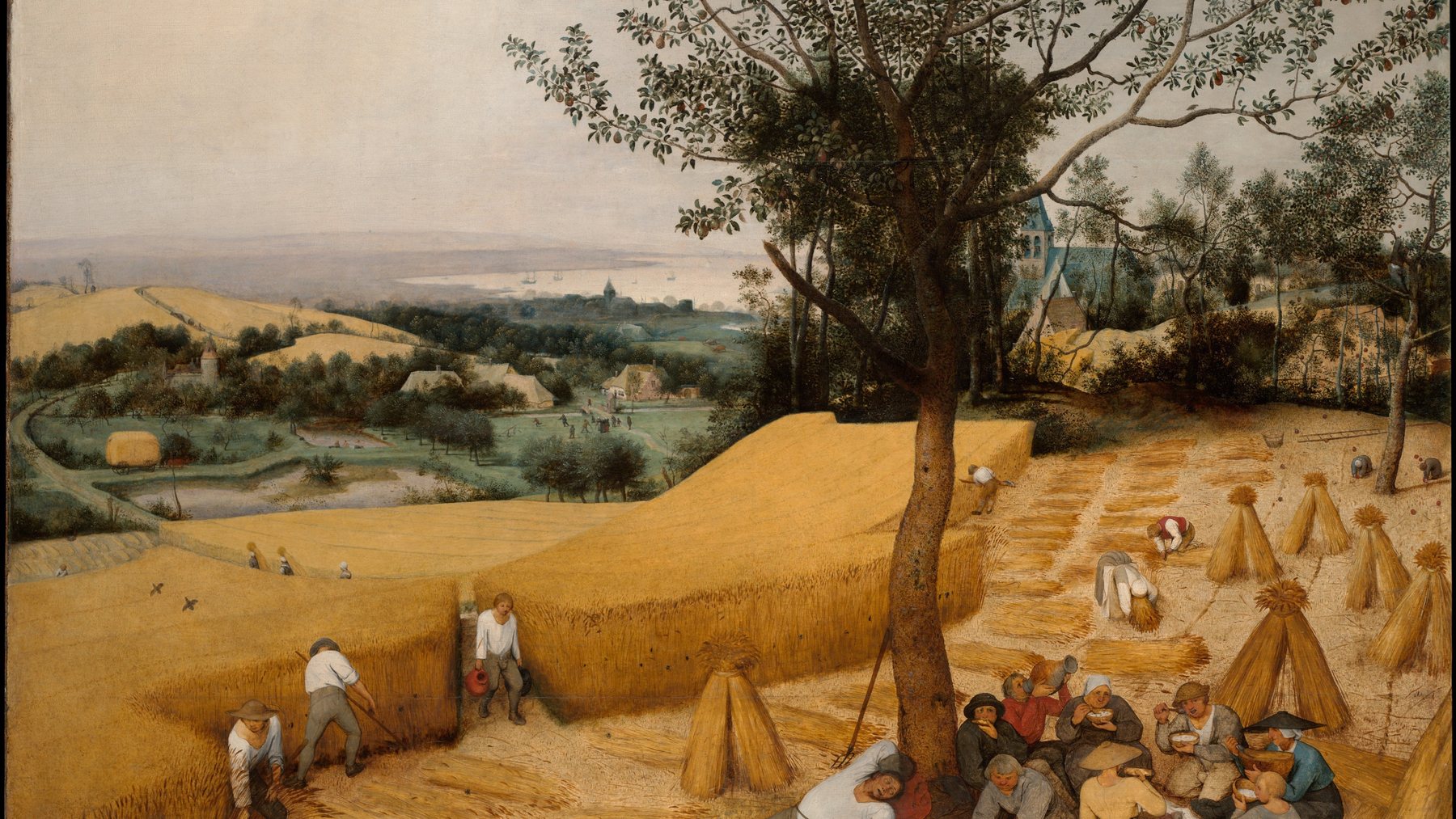
- The Harvesters. Pieter Bruegel the Elder. 1565. Metropolitan Museum of Art. Public domain. Source
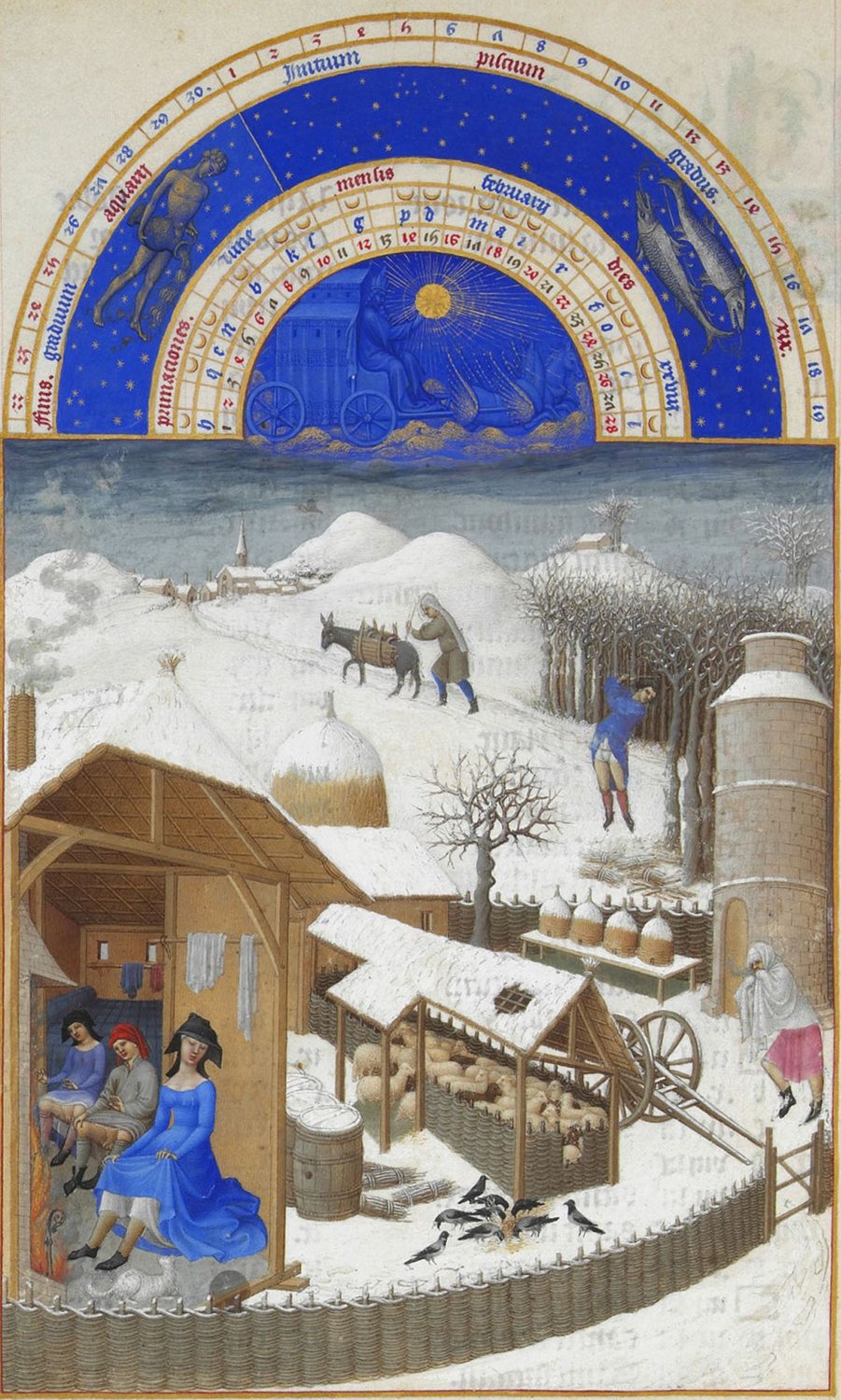
- February, from the Très Riches Heures du Duc de Berry, folio 2 verso. The Limbourg brothers. c. 1412 to 1416. Musée Condé, Chantilly. Public domain. Source
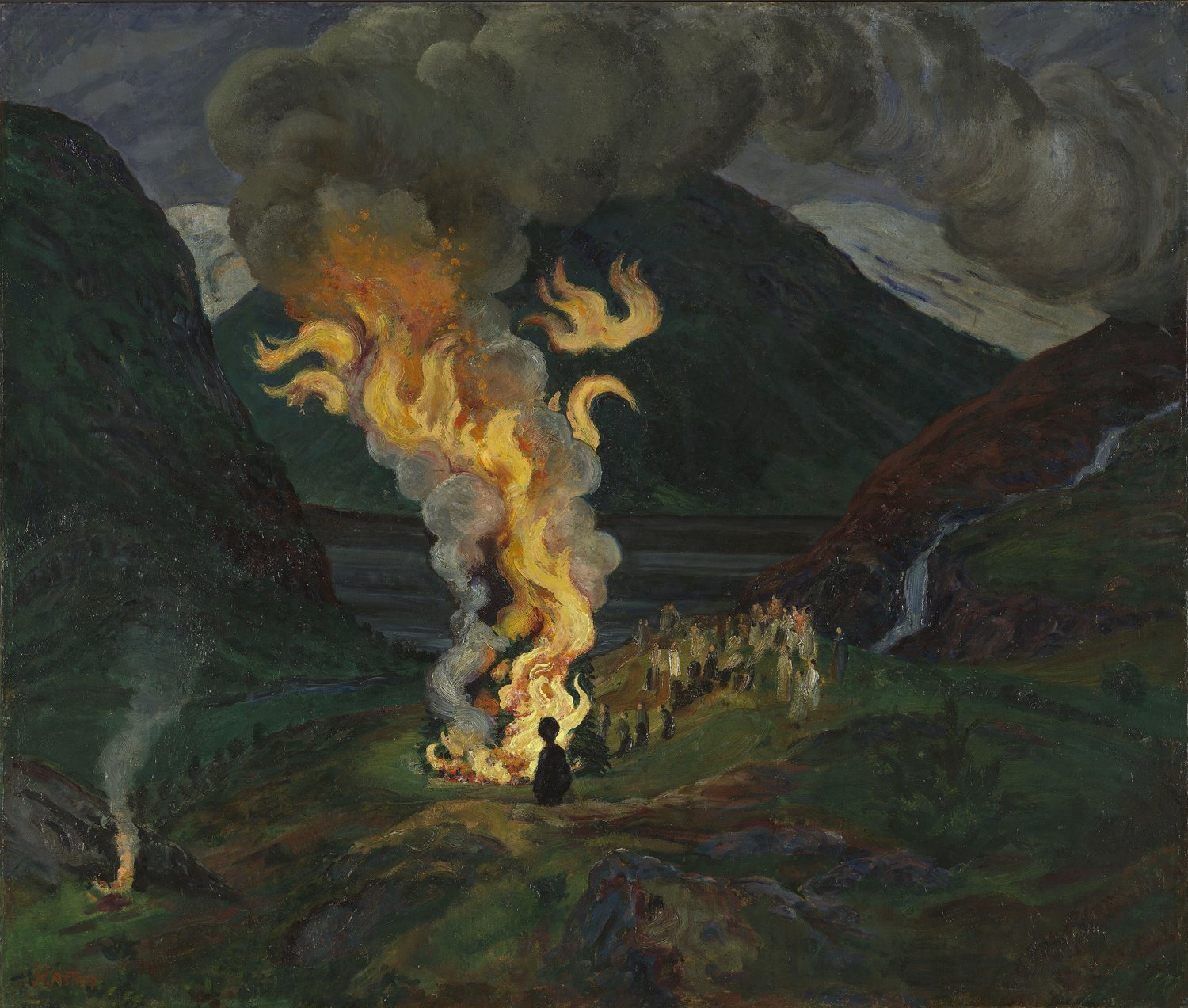
- Bonfire celebrating Midsummer Night (Jonsokbål). Nikolai Astrup. National Museum of Art, Architecture and Design, Oslo. Public domain. Source