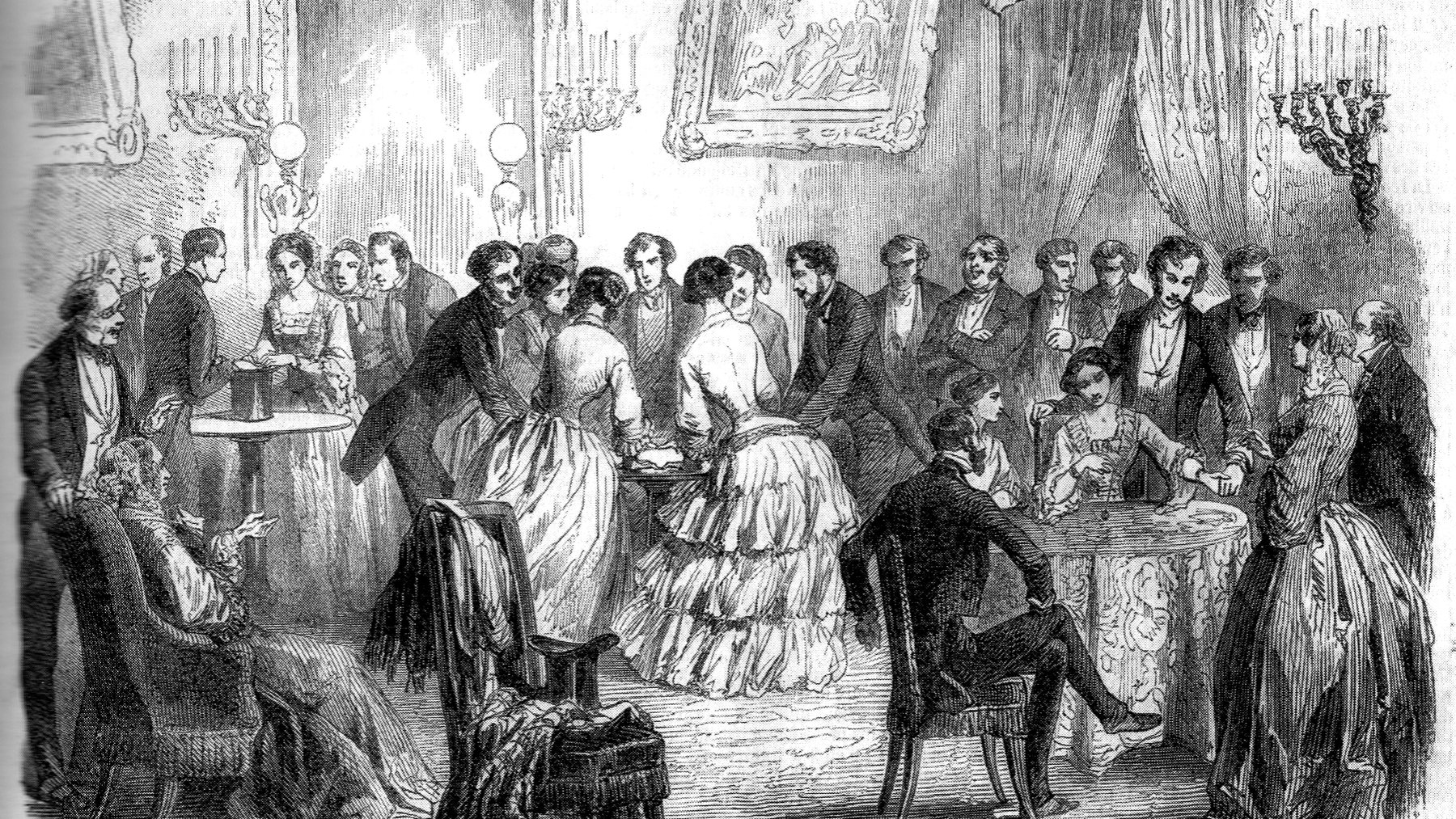
I run séances. Not often, and never as entertainment, but a few times a year I sit a small number of people around a table in a low-lit room and we do a thing that was invented in upstate New York in 1848 by two girls who were, on their own later testimony, cheating.
I want to write about that honestly, because the two available public positions on the séance are both useless. One says it is a doorway to the dead and asks no questions. The other says it is nonsense with a documented history of fraud and stops there, which has the disadvantage of being almost entirely true and yet failing to explain why the form has outlived every attempt to kill it.
What follows is the history without flinching, and then what I actually do and why.
Hydesville, 1848
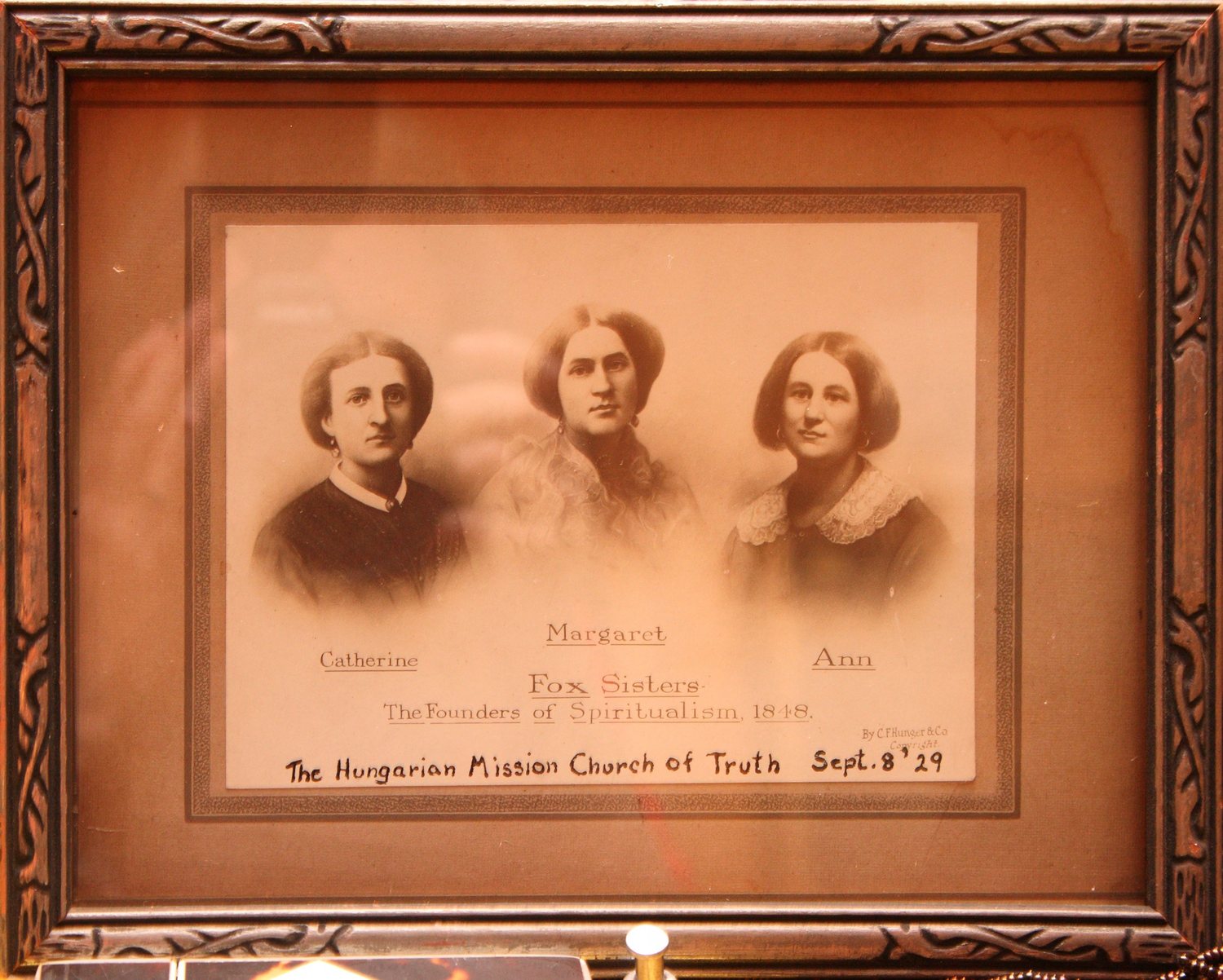
A farmhouse in Wayne County, New York. Two sisters, Kate and Maggie Fox, aged around eleven and fourteen, report knocking sounds in the house and establish a code with whatever is producing them. One rap for yes. The story is that they addressed it as Mr Splitfoot and it answered.
Their older sister Leah took charge of the phenomenon and, within a couple of years, of a career. Public demonstrations in Rochester, then New York. And then something remarkable: the practice spread across the United States and into Britain with a speed that is difficult to overstate. Within a decade there were mediums in most sizeable towns, journals, national organisations, lecture circuits and a large and respectable middle-class following.
Why so fast? Several reasons converge, and they are worth naming because they explain what the séance was actually for.
- The dead were everywhere. Child mortality in the mid nineteenth century was catastrophic by our standards. Most adults had buried a child, a sibling, or both. Then came the American Civil War, with hundreds of thousands of young men dying far from home, frequently unnamed and unburied. Spiritualism in the 1860s is, among other things, a mass response to a mass bereavement.
- The available theology was cold. The dominant Protestant answer to a grieving parent involved submission to divine will and the hope of reunion at some indefinite future point. Spiritualism offered the dead child now, this evening, in this room, saying that she was well. That is an overwhelming offer.
- The technology made it plausible. The telegraph was new. People had just watched invisible messages travel instantly along a wire from someone they could not see. A code of knocks from an invisible correspondent did not sound absurd in 1850. It sounded like a further application of a principle everyone had just accepted.
- It gave women a platform. The medium's chair was one of very few positions in which a nineteenth century woman could speak with authority to a mixed audience of men, and be listened to. A great deal of early feminist and abolitionist energy ran through Spiritualist networks, and this is not a coincidence.
And then the record of fraud, which is enormous
I am not going to soften this, because softening it is exactly what has given the whole subject its bad name.
In 1853 Michael Faraday, one of the finest experimentalists who has ever lived, investigated table turning. He built a simple apparatus: a board on the tabletop, resting on small rollers, so that if the sitters' hands moved before the table did, the board would slide. It slid. The hands were moving first. The sitters were pushing, and were sincerely unaware that they were pushing. The following year the physician William Benjamin Carpenter gave the phenomenon its name, the ideomotor effect: muscular action produced by expectation, below the level of conscious intention.
That single finding accounts for table tilting, planchette writing, the Ouija board, dowsing, and a very large portion of what happens at any table where people are touching a shared object and hoping.
Then there is the deliberate fraud, which is a long catalogue. The Davenport brothers and their rope-tie cabinet, which was a stage escape act sold as spirit manifestation. Henry Slade and the slate writing, prosecuted in London in 1876. Materialisation mediums producing spirit forms who bore a persistent resemblance to the medium in cheesecloth. Eusapia Palladino, tested more rigorously than almost anyone, repeatedly caught freeing a hand or a foot, and yet still producing results that some careful investigators could not account for, which is its own kind of maddening.
The Society for Psychical Research, founded in Cambridge in 1882 by people who genuinely wanted the phenomena to be real, did more to demolish mediumship than any sceptic, simply by insisting on controls. Harry Houdini, who took the whole business personally after mediums tried to exploit his grief for his mother, spent the last years of his life exposing methods and published A Magician Among the Spirits in 1924.
And in 1888 Margaret Fox stood on a stage at the New York Academy of Music and demonstrated to a paying audience how she produced the raps, by cracking the joints of her toes. She said the whole thing had been a childish deception that outgrew them. It is one of the most complete confessions in the history of any religious movement.
She recanted it the following year. Both facts belong in the same paragraph and I will not give you one without the other. She was, by then, in poor health and in poverty, and each side of the argument has an explanation for both the confession and the recantation that suits them. What cannot be argued is that the founding phenomenon of modern Spiritualism was, at minimum, described by one of its two originators as a fake.
If you cannot say all of that out loud, in a room, before you begin, you have no business running a séance.
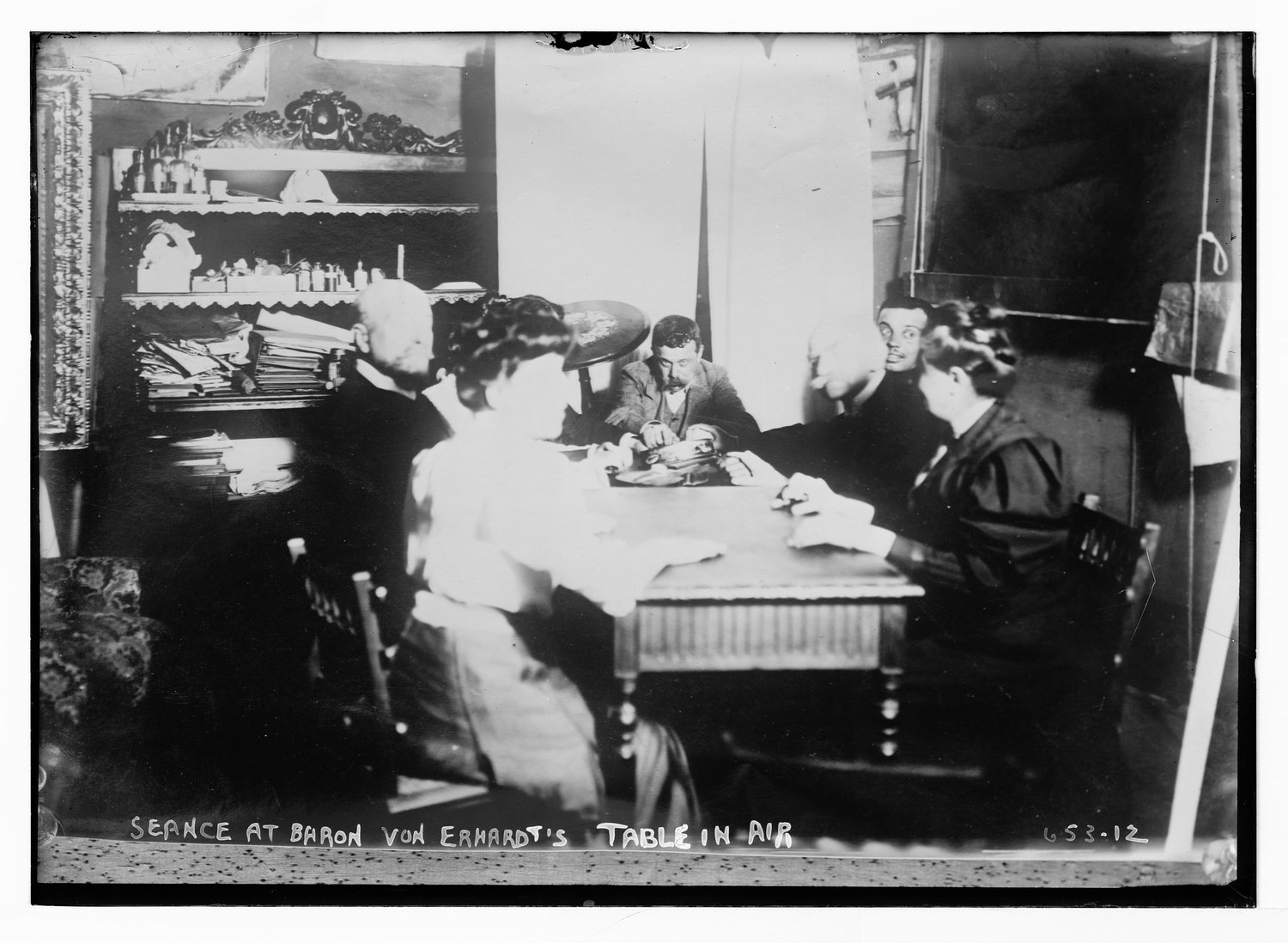
So that is the record. A century and a half of toe joints, cheesecloth, reaching rods, hidden accomplices and grief taken in exchange for money. Anyone who tells you about spiritualism without telling you this first is selling you something.
And I still sit down at a table, in a dark room, with eight people and a candle, several times a year.